Data Collection
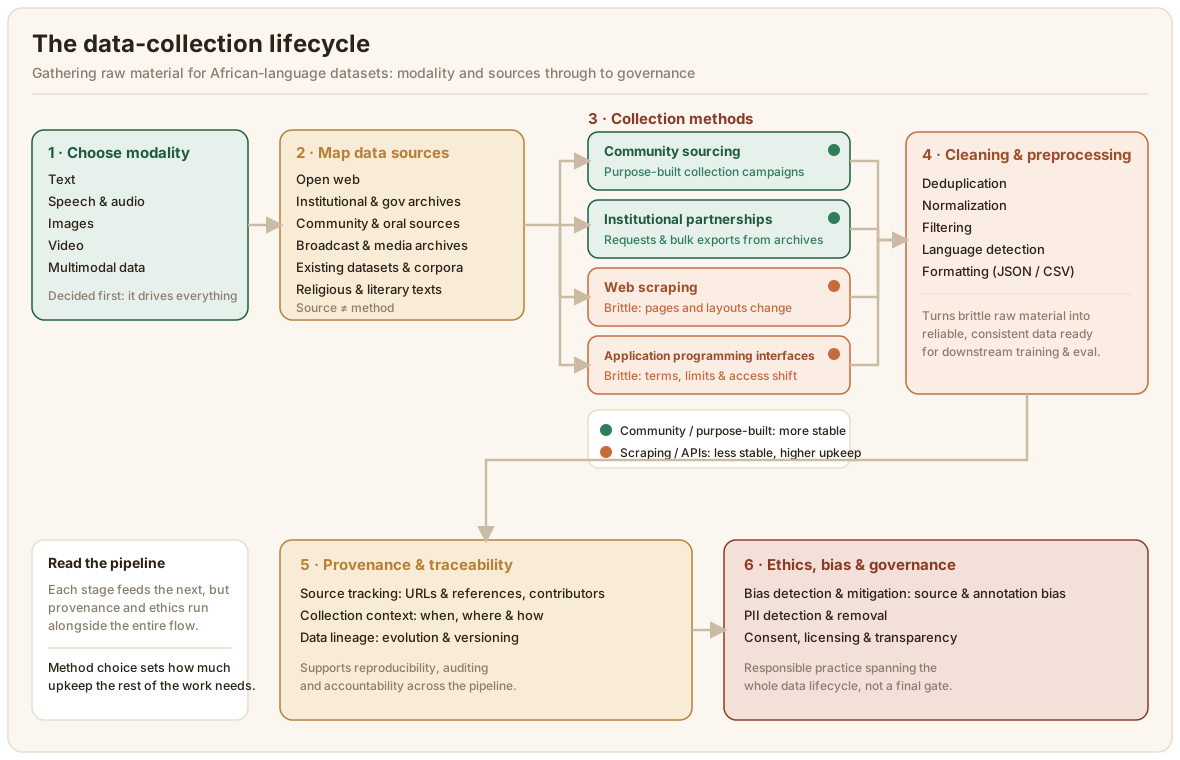
Every dataset starts the same way: someone has to go and get the raw material. This chapter is about that first step, what the rest of the playbook calls data collection or data curation. We mean this narrowly: the actual gathering of raw text, images, audio, or video, before anyone has cleaned it, labelled it, or decided what it means. What happens after collection (cleaning, annotation, quality control, and release) is covered in the chapters that follow.
How you collect data depends almost entirely on its modality: the format the data takes, whether that's text, images, audio, or video. Each modality has its own sources, its own tools, and its own failure modes, and a method that works well for one (scraping news sites for text) can be close to useless for another (there is no equivalent "scrape the web" shortcut for spoken-language audio in a language with no written tradition).
The sections below work through the building blocks in order: what modality you're collecting, where it can come from, two of the most common collection mechanisms in detail (web scraping and APIs), and a worked case study showing how these decisions interact when a project spans more than one modality at once. The chapter closes with what happens once raw data is in hand: planning the resources it took to get there, cleaning it, tracking where it came from, and governing it responsibly.